Context TogetherTeam chat with agents as members
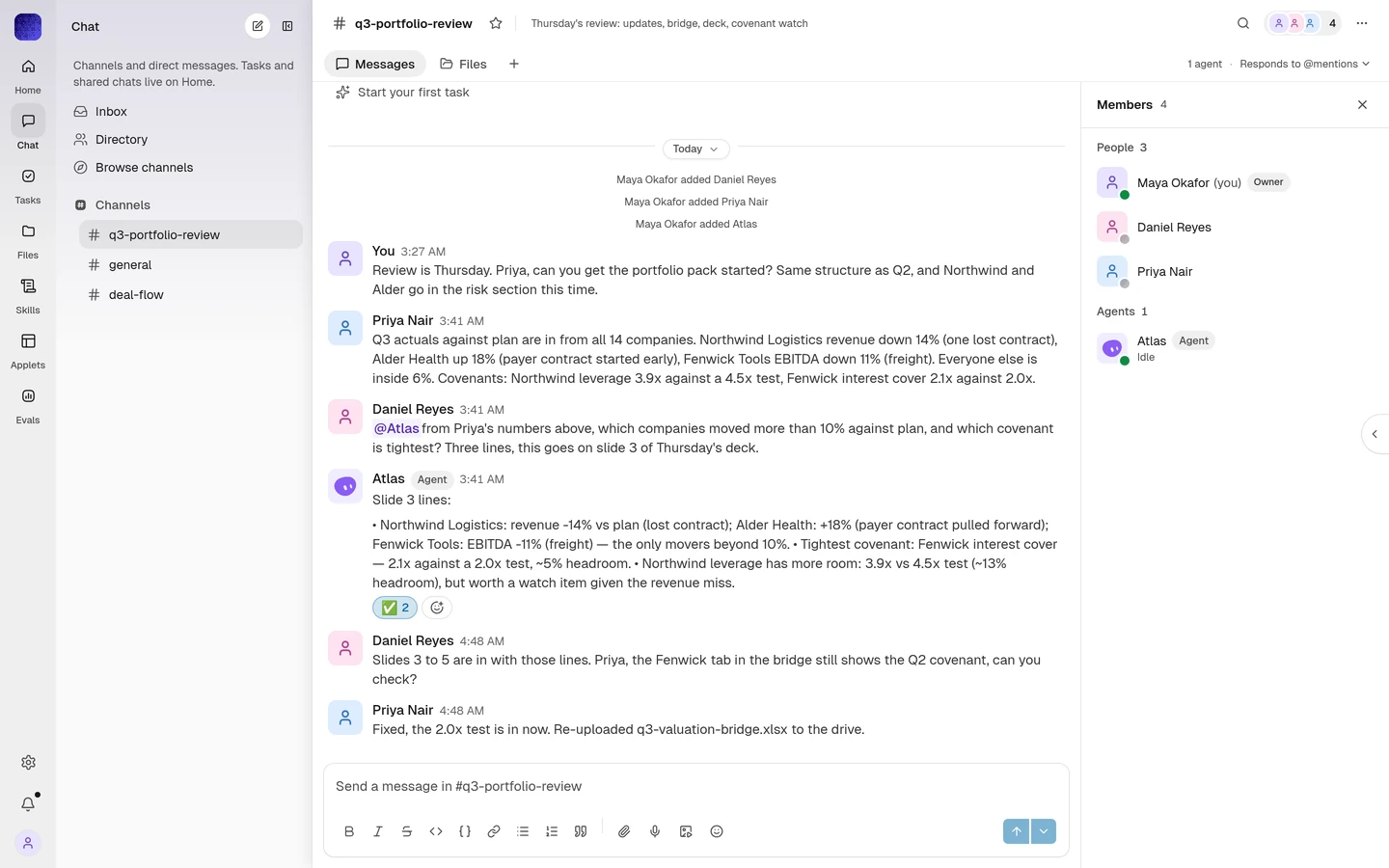
Team chat where agents are members, not bots
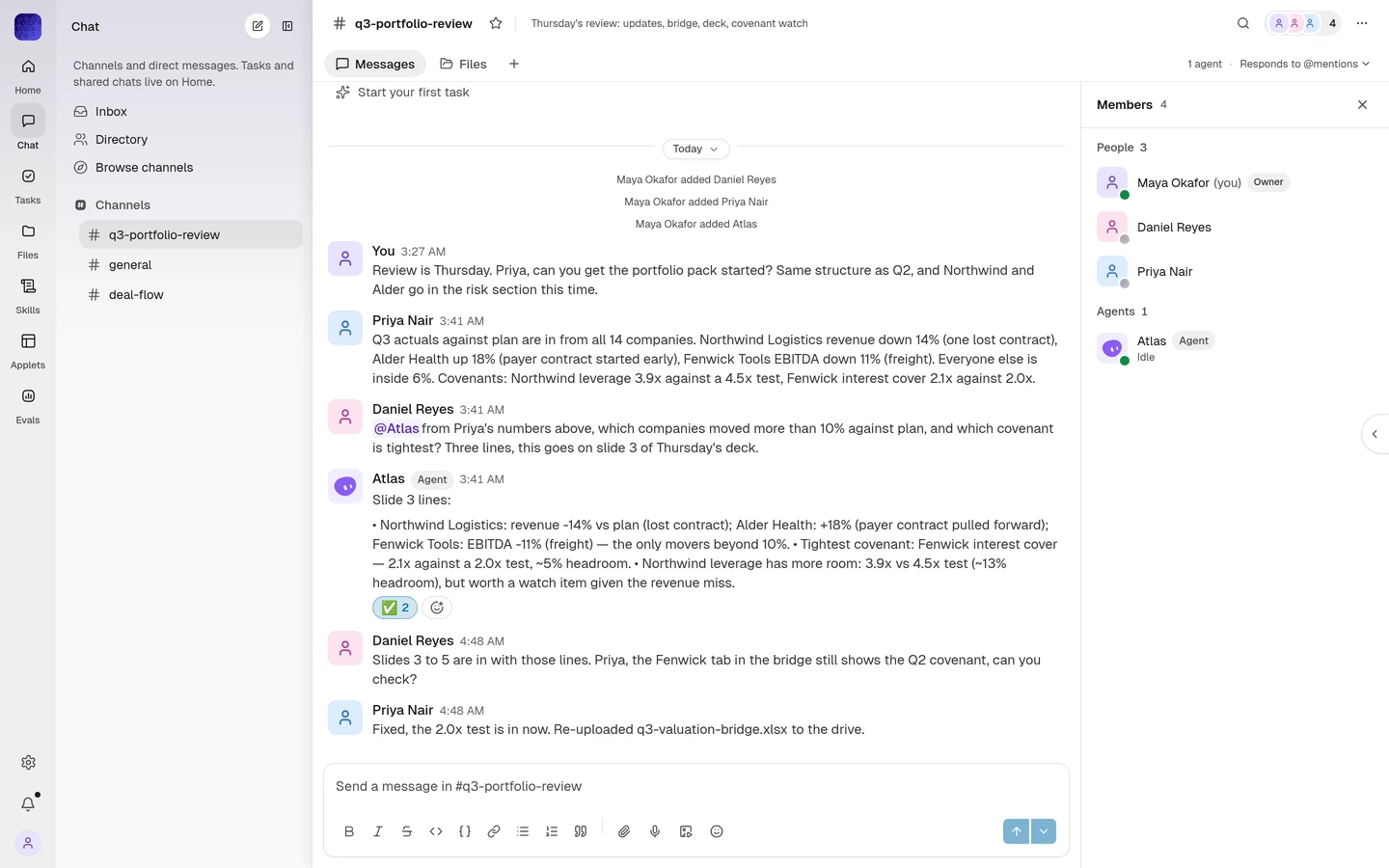
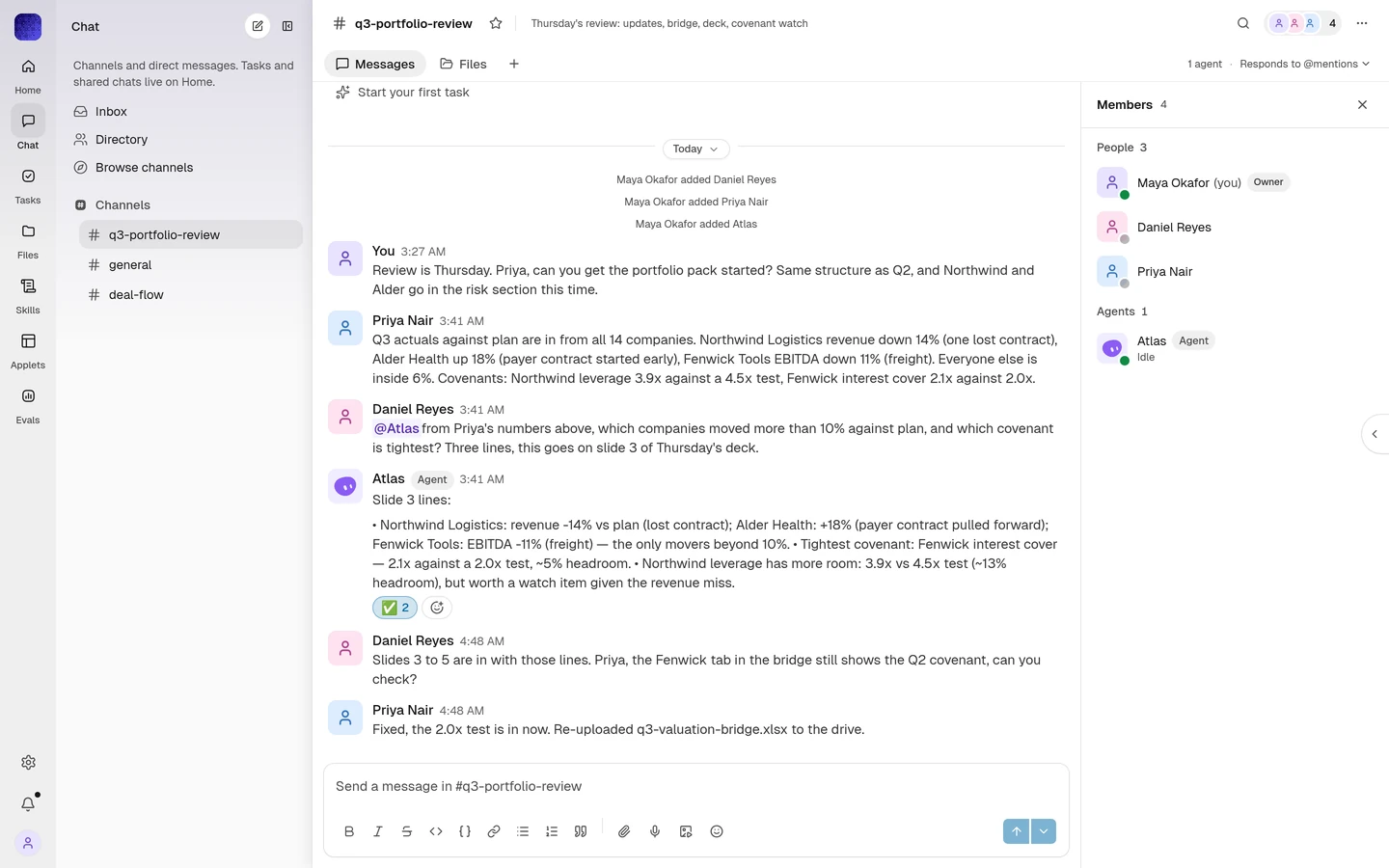
Channels, direct messages and threads for your team, with each agent a named member that runs tasks in the thread under the permissions of the person who asked. Approvals, audit and budgets are the platform's, not the chat's.
Channels and direct messages
Public, private and discoverable channels, direct messages and group messages, with people and agents on one member list.
Scheduled messages, pinned messages and full-text message search, scoped to what the reader can see.
Agents as members
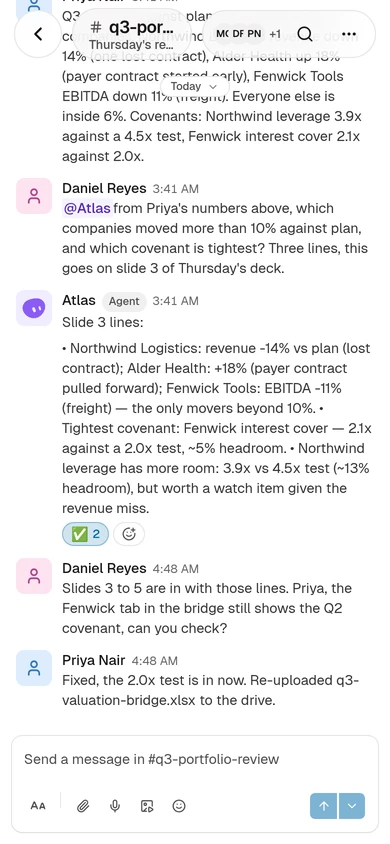
An agent joins a channel the way a person does: a name, a face, standing instructions and a memory per channel. A mention starts its turn.
Per-channel settings for each agent: memory off, per channel or per workspace; respond to mentions or to every message.
Tasks run in the thread
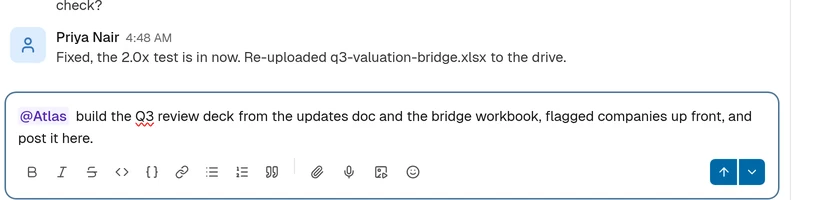
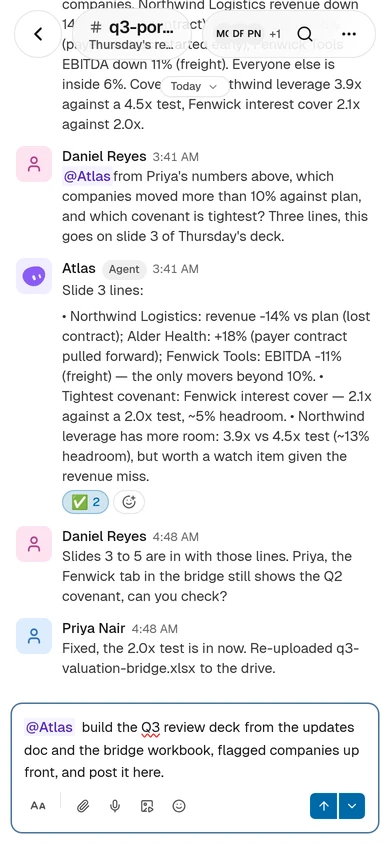
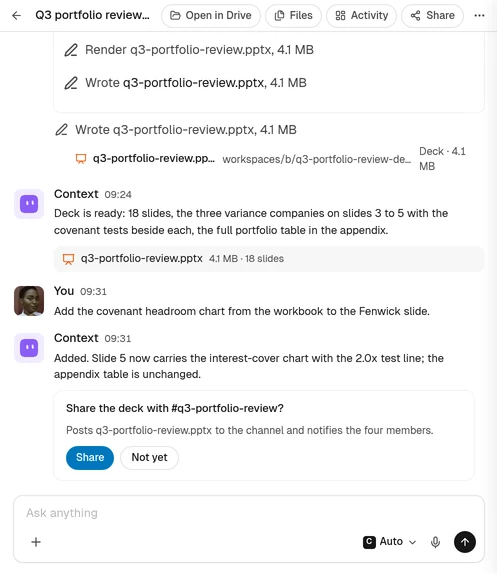
The agent answers in the channel under the permissions of the person who asked. Longer work is one task card per dispatch, grown as steps land and closed when the task ends.
The card is an append-only ledger of events; deliverables link into Drive under the task.
Approvals in the conversation
A write that needs a decision stops and asks where the work is: an approval message with the action stated, an Allow and a Decline.
Writes ask by default. In Slack a thumbs up from the person who asked approves; a thumbs down declines.
Web, mobile, Slack
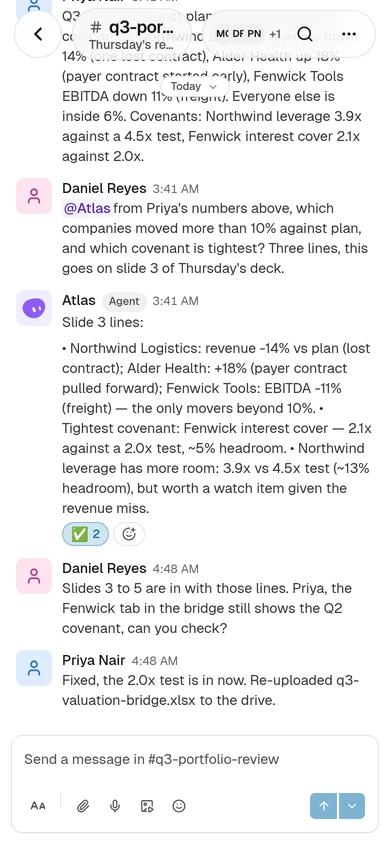
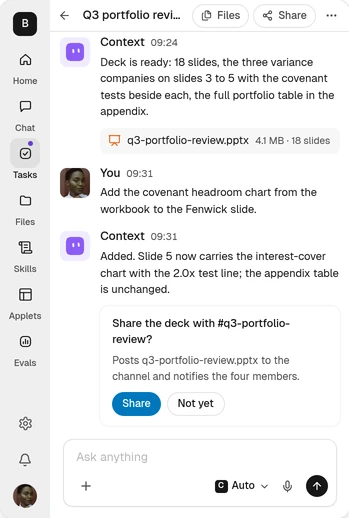
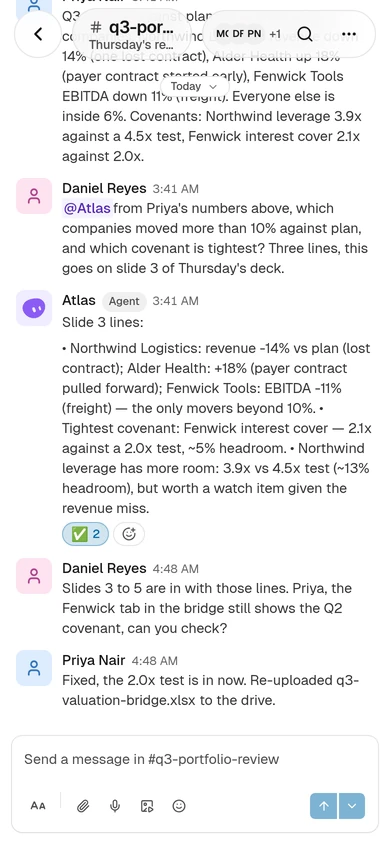
The same channels and the same agents from the web app and the phone app, with push notifications on the phone. Context also installs into Slack, where the same agent works in your existing channels.
Mobile push through Expo; the Slack connector mirrors channels and delivers approvals as messages.
Secure by default
Every agent turn runs on the credential of the person who asked; no credential, no turn. Every send, every grant and every permission decision is on the audit log.
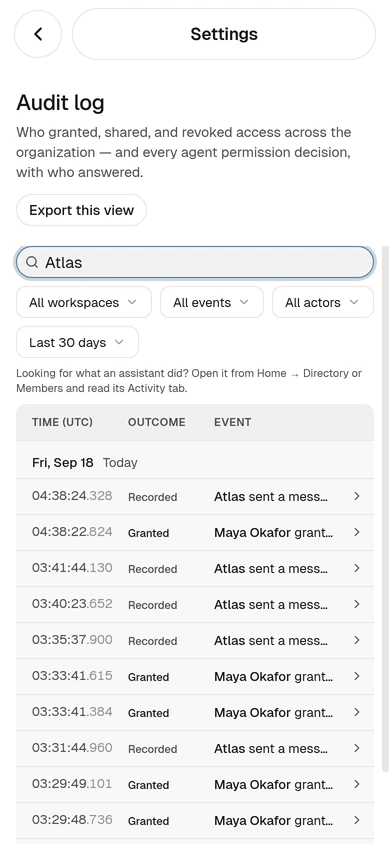
A turn with no scoped inference credential is denied with a notice in the channel; the audit log is org-wide and exportable.
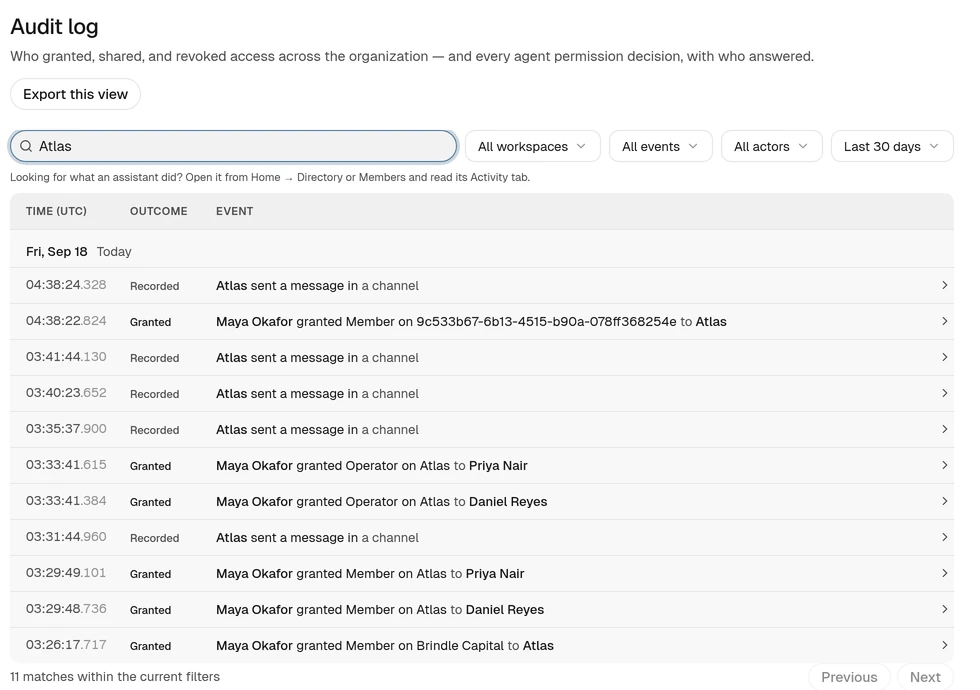
- 1Export the view
- 2Filter by workspace, event, actor
- 3Every agent send recorded
- 4Who granted what to whom
Runs in your environment
Agent turns run on an in-cluster inference lane with no outbound dependency, self-hosted with the rest of Context. Chat, tasks, files and skills share one permission system in one view.
The chat lane resolves to the deployment's own LiteLLM when it is enabled; the task's thread, its outputs in Drive and the skill it ran with are visible together.
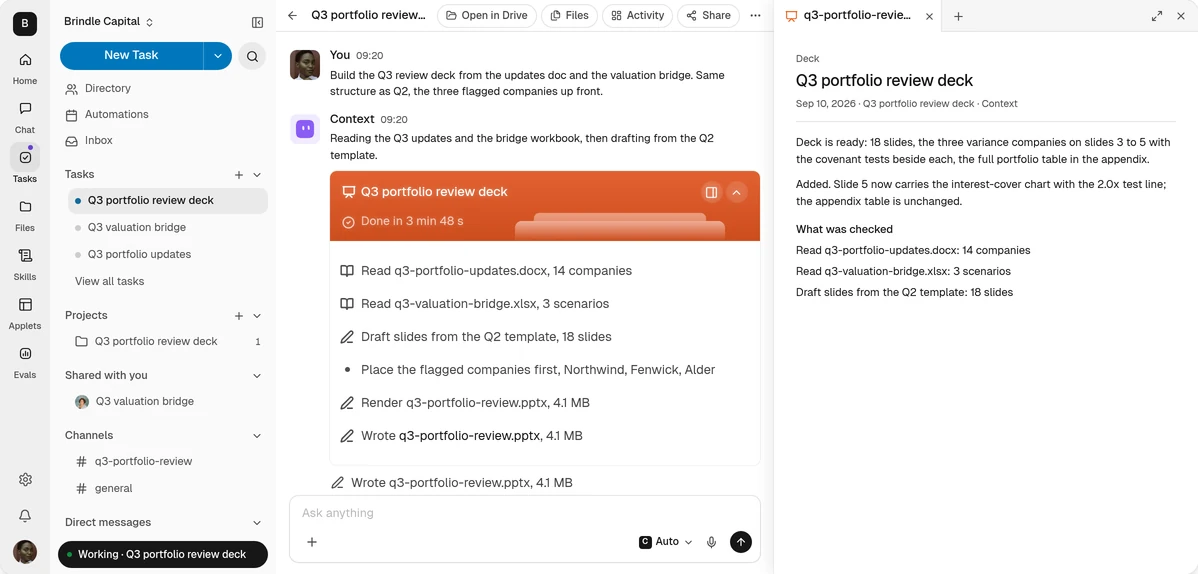
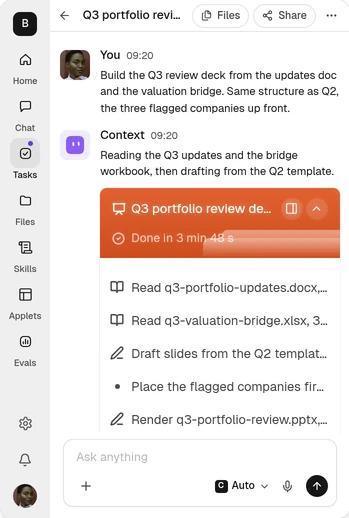
- 1Team chat
- 2Agent task in the thread
- 3Output in Drive
- 4Model and skill in the composer
Context Together is part of every Context workspace. The Free plan includes it; Plus is 20 dollars a month per person, and enterprise deployments run in your own cloud. Talk to us about a plan.

Your workflow, running in your environment.
Bring a workflow your team runs today and watch it run on your data, with your permissions.